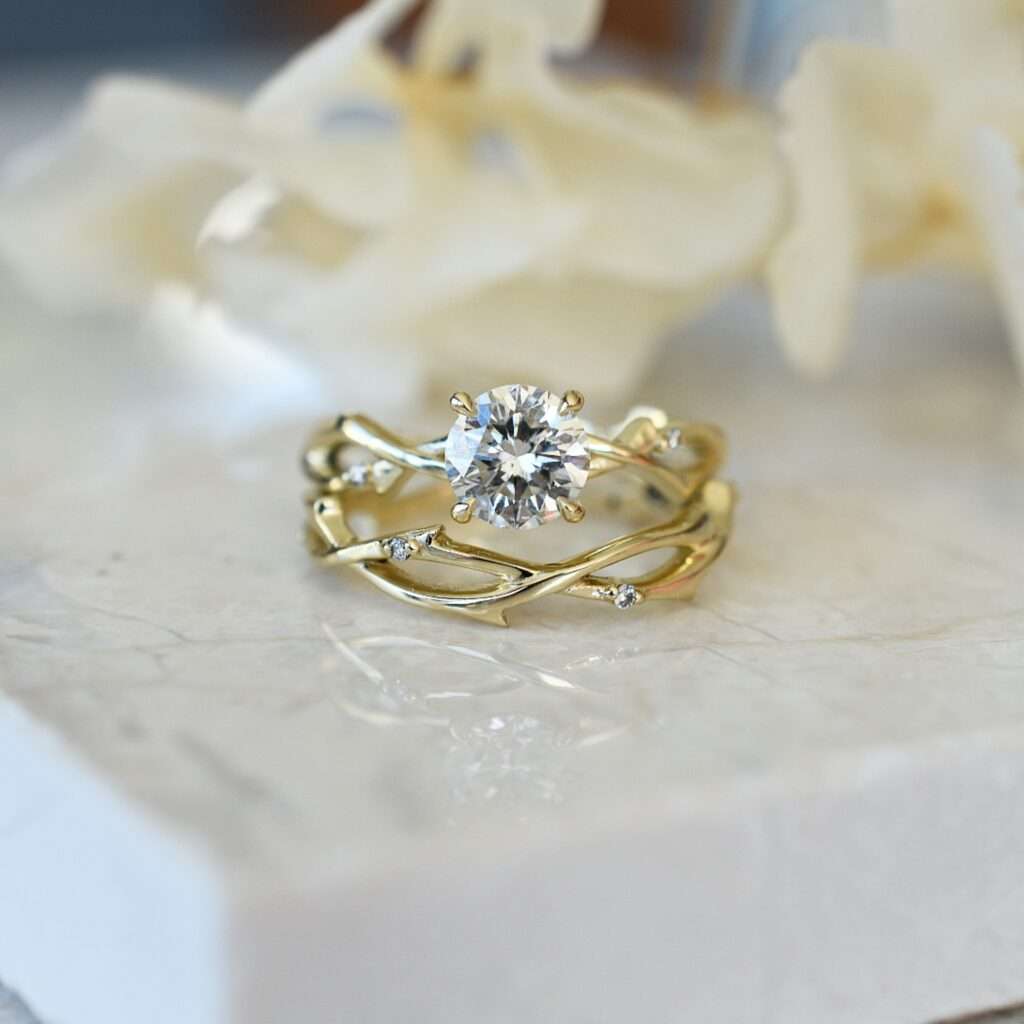
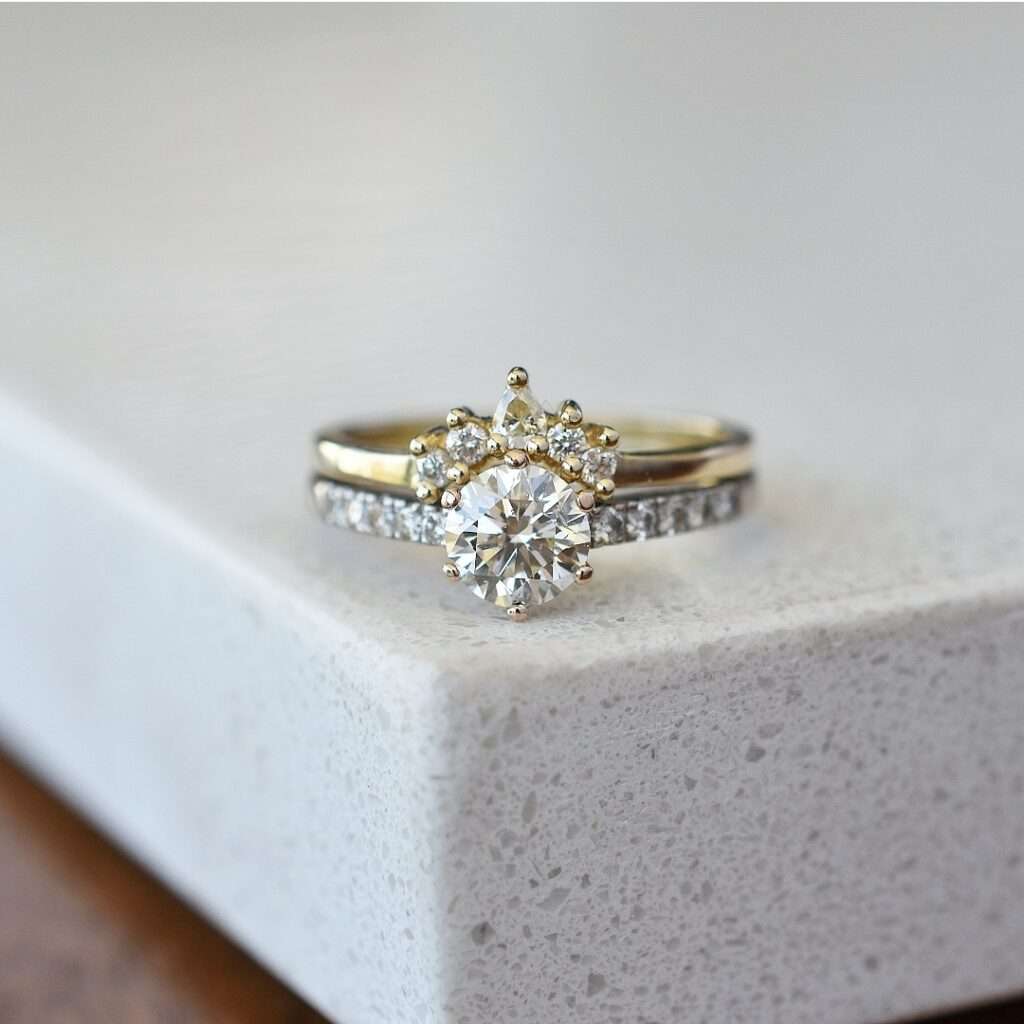
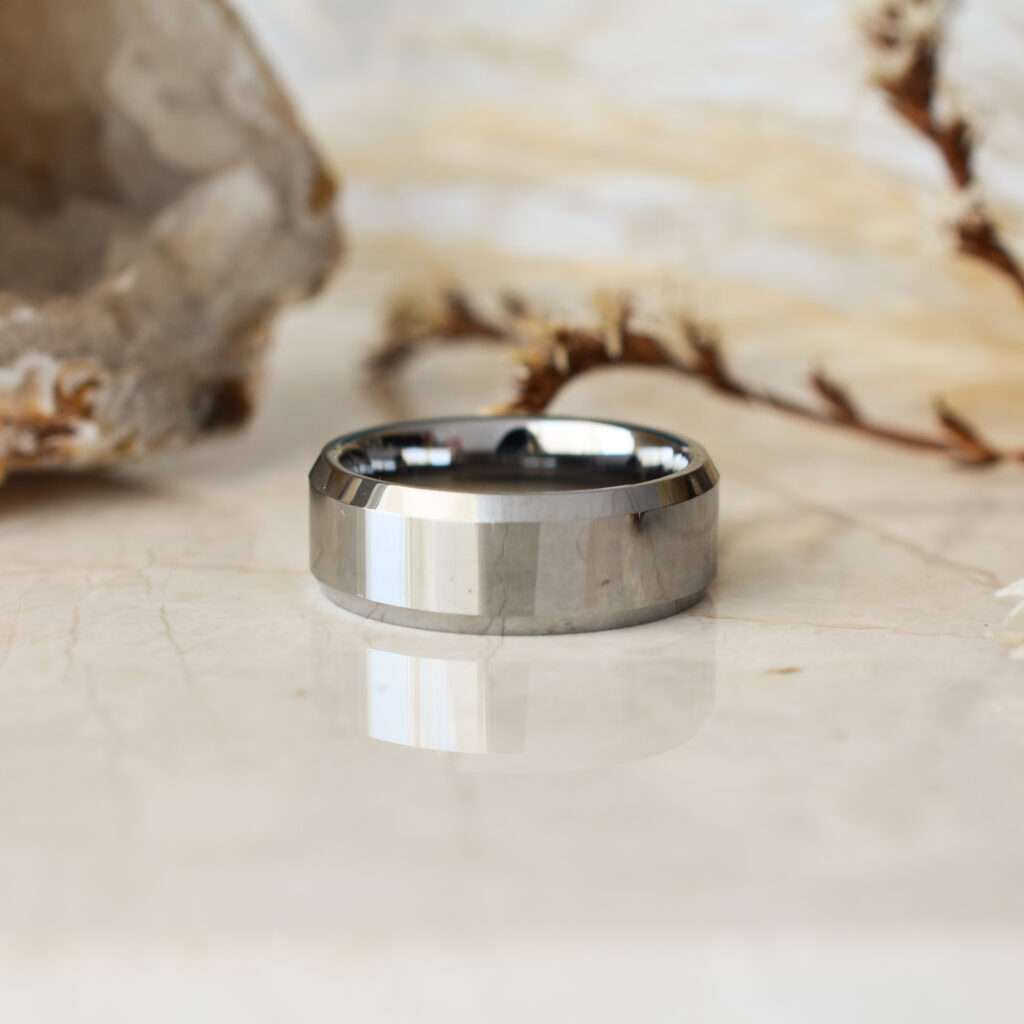
Choosing a diamond engagement ring is a personal decision. From the shape and carat weight of the diamond to the colour of the gold and the style of the setting, each choice contributes to the finished design. You might already have a particular ring in mind, or you may need some guidance to work out which combination of diamond, metal and setting suits your preferences.
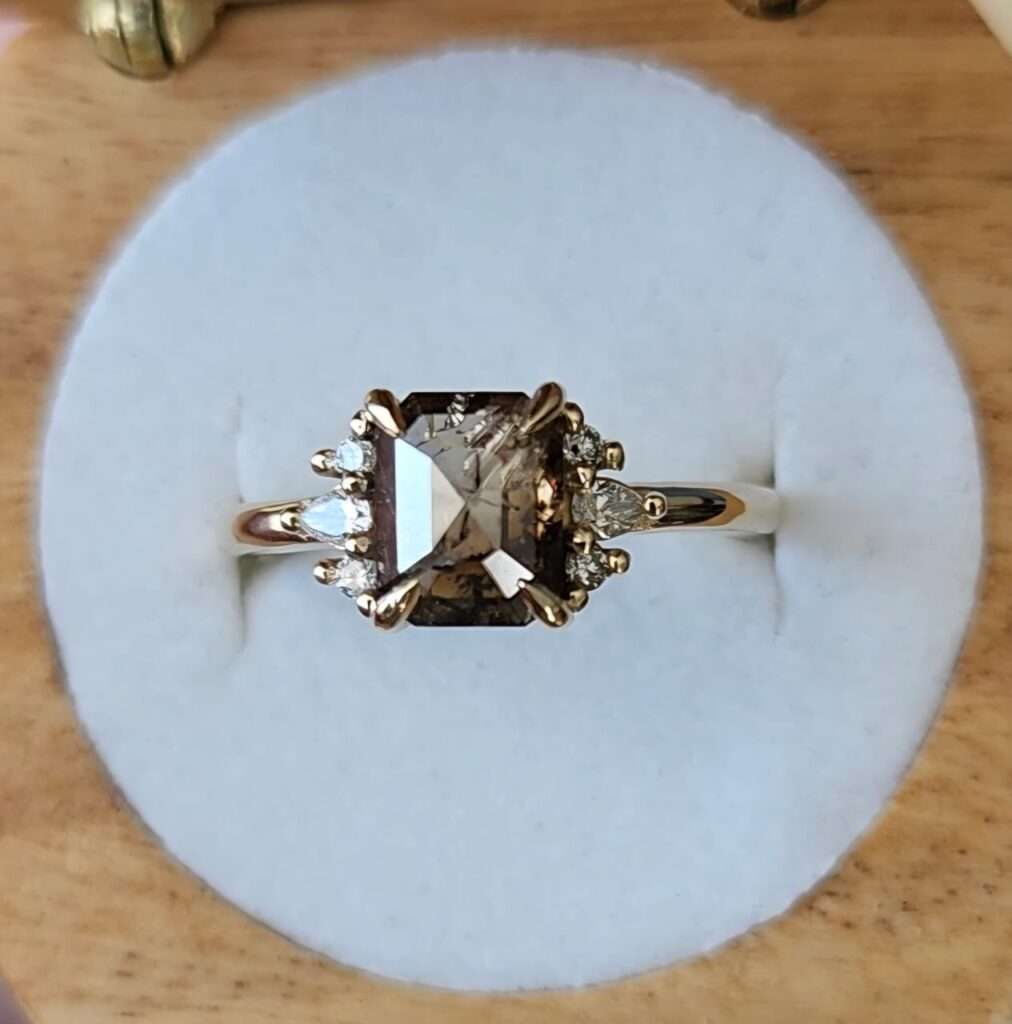

Working with a jewellery designer gives you the opportunity to explore these options and create a ring around your ideas. Stephani Cillié of Gold&I specialises in custom jewellery design, helping clients develop engagement rings based on their preferred diamonds, metals, settings and details. Instead of starting with a finished ring and trying to find one that fits, you can start with an idea and work towards a design made specifically for you.
Let’s explore diamond carat weights, colour grades, popular engagement ring settings, gemstone combinations and precious metals. We also look at matching wedding bands and explain how these choices can help you plan a custom diamond engagement ring with Gold&I.
Choosing the Right Diamond for Your Engagement Ring
The diamond is often the starting point when planning an engagement ring. Its carat weight, colour, cut and clarity all contribute to its appearance, and each factor is worth considering before deciding on a setting.
Stephani can help you explore how different diamonds may work within your preferred design. You might want a single centre diamond, a ring with smaller diamonds along the band, or a design that combines a diamond with coloured gemstones. Understanding the options helps you make informed decisions about the ring you want to create.
Understanding Diamond Carat Weight
Carat weight measures a diamond’s weight, not its physical dimensions. One carat equals 200 milligrams, and a carat can be divided into 100 points. A 0.50ct diamond weighs half a carat, while a 0.25ct diamond weighs a quarter of a carat.
The carat weight you choose influences the appearance and cost of your engagement ring. However, two diamonds with the same carat weight can look different in size because their shapes, proportions and cutting styles vary. A round diamond and an oval diamond of the same weight, for example, may have different face-up dimensions.
Smaller diamonds can be used as centre stones, side stones or part of a cluster design. A half-carat or one-carat diamond can work in a solitaire, halo or three-stone setting, while a larger centre diamond can form the main feature of a ring with a simpler band.
There is no single carat weight that every engagement ring should have. Your choice depends on your preferred appearance, budget and design. When comparing diamonds, consider carat weight alongside cut, colour and clarity. These four characteristics are known as the 4Cs and are used to assess diamond quality.
Understanding Diamond Colour Grades
Diamond colour is graded on a scale from D to Z by the GIA. D represents colourless, while Z indicates light colour, usually yellow or brown. Diamonds with distinct colours outside this scale, such as blue, pink or more intensely coloured yellow diamonds, are assessed using a separate fancy-colour grading system.
D, E and F are classified as colourless. G, H, I and J fall within the near-colourless range. From K through Z, diamonds show increasing levels of colour. Differences between neighbouring grades can be subtle, particularly without direct comparison.
A colourless diamond can be set in white gold, yellow gold, rose gold or platinum. Near-colourless diamonds can also be used in all these metals. The metal and setting influence the overall appearance of the ring, so it is worth comparing diamonds alongside the metal you are considering.
Diamonds with a more noticeable yellow or brown tone may also suit certain designs, particularly if you want the stone’s colour to form part of the overall look.
Stephani can help you consider how the diamond’s colour, shape and size will work with the setting and metal you choose. The aim is to find a combination that suits your preferences rather than selecting a diamond based on its grade alone.
Can You Choose a Coloured Diamond?
Yes. Diamonds occur in several colours, including yellow, pink, blue, green and brown. Their colour may occur naturally or result from treatment, so it is important to understand the origin of the colour when purchasing a coloured diamond.
Fancy-colour diamonds are assessed according to characteristics such as hue, tone and saturation rather than using the standard D-to-Z scale alone.
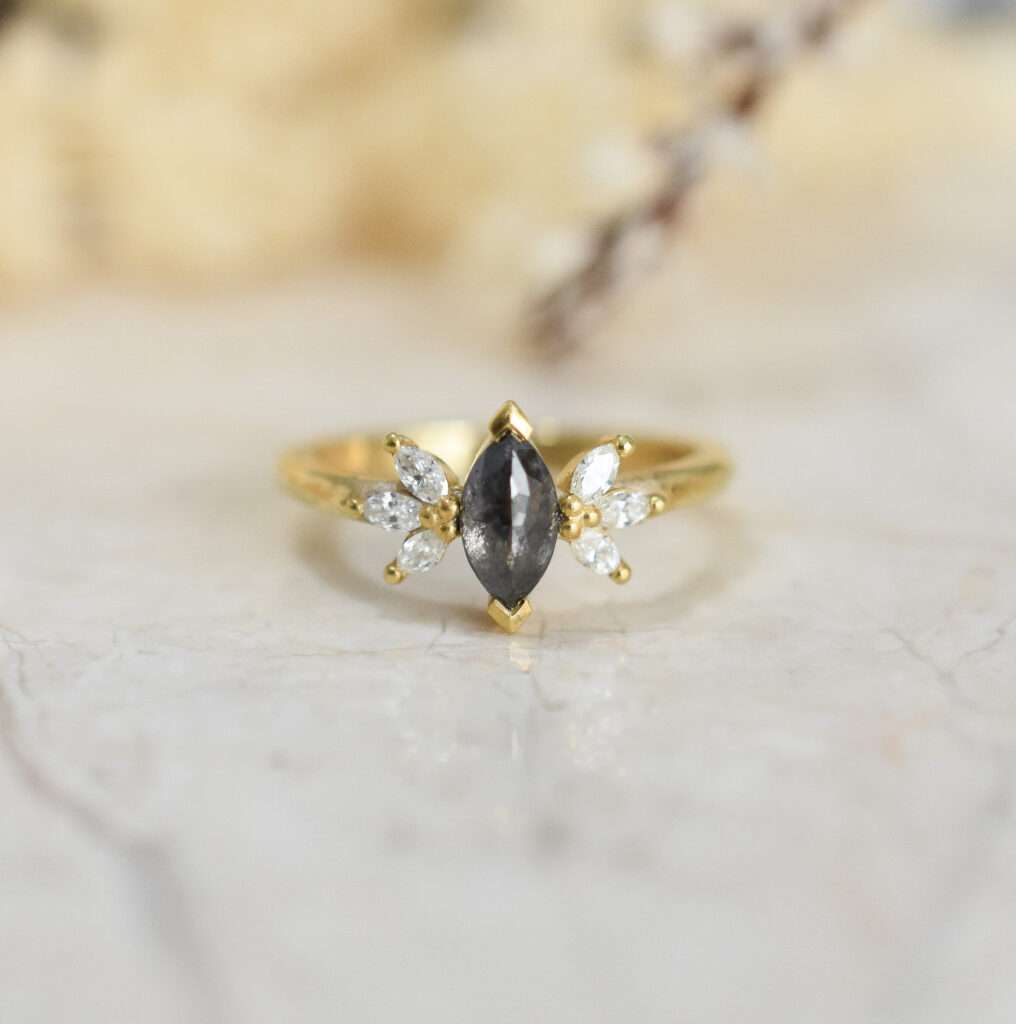
A coloured diamond can be used as the centre stone or combined with colourless diamonds in the same ring. The availability and price of a particular colour depend on factors including its intensity, origin and whether it has been treated.
If you have a particular colour in mind, this can be part of the conversation when planning a custom engagement ring with Stephani.
Designing Your Engagement Ring Around Your Style
Once you have an idea of the diamond you want, the next step is to consider the setting and overall design. The setting affects how the stone is held, how much of it is visible and how the ring sits on your finger.
With a custom diamond engagement ring, these elements can be considered together. Stephani Cillié can work with your preferences to develop a design that reflects the details you have in mind, whether you are starting with a specific diamond, a reference image or an idea that still needs to take shape.
Solitaire Engagement Rings
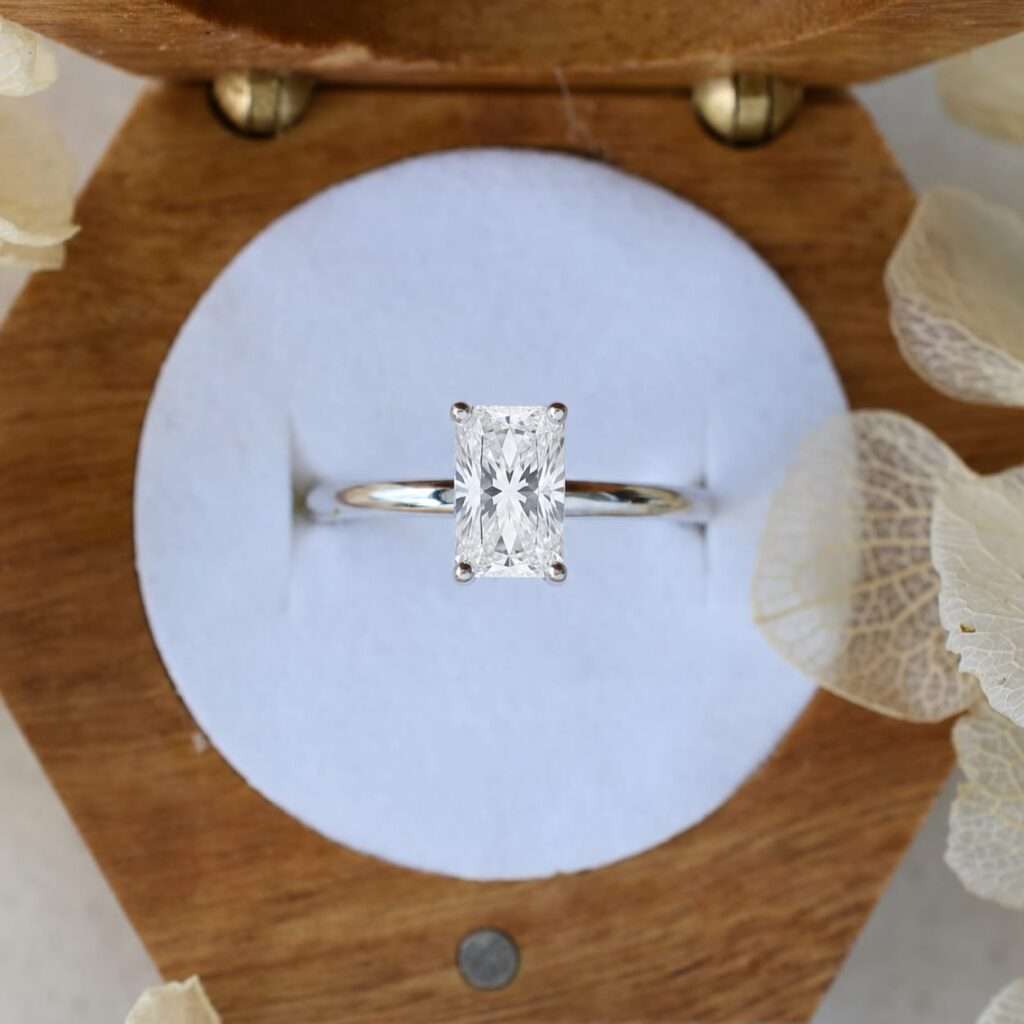
A solitaire engagement ring has one main centre stone. The diamond is often held by prongs, although other setting styles are available. A solitaire can be designed around a round, oval, pear, emerald or other diamond shape.
Because the centre diamond is the main feature, the band may be plain or include smaller diamonds. A plain wedding band is a common option for this style, but a diamond-set band can also be chosen.
A custom solitaire allows you to consider the diamond’s shape and proportions alongside the height, width and profile of the setting.
Halo Engagement Rings
A halo engagement ring has a centre diamond surrounded by smaller stones. The halo may follow the outline of a round, oval, cushion or other centre stone.
The additional diamonds change the overall dimensions of the ring when viewed from above. When choosing a wedding band, consider the width and profile of the halo setting, as these can influence how closely a straight band sits against the engagement ring.
Three-Stone Engagement Rings
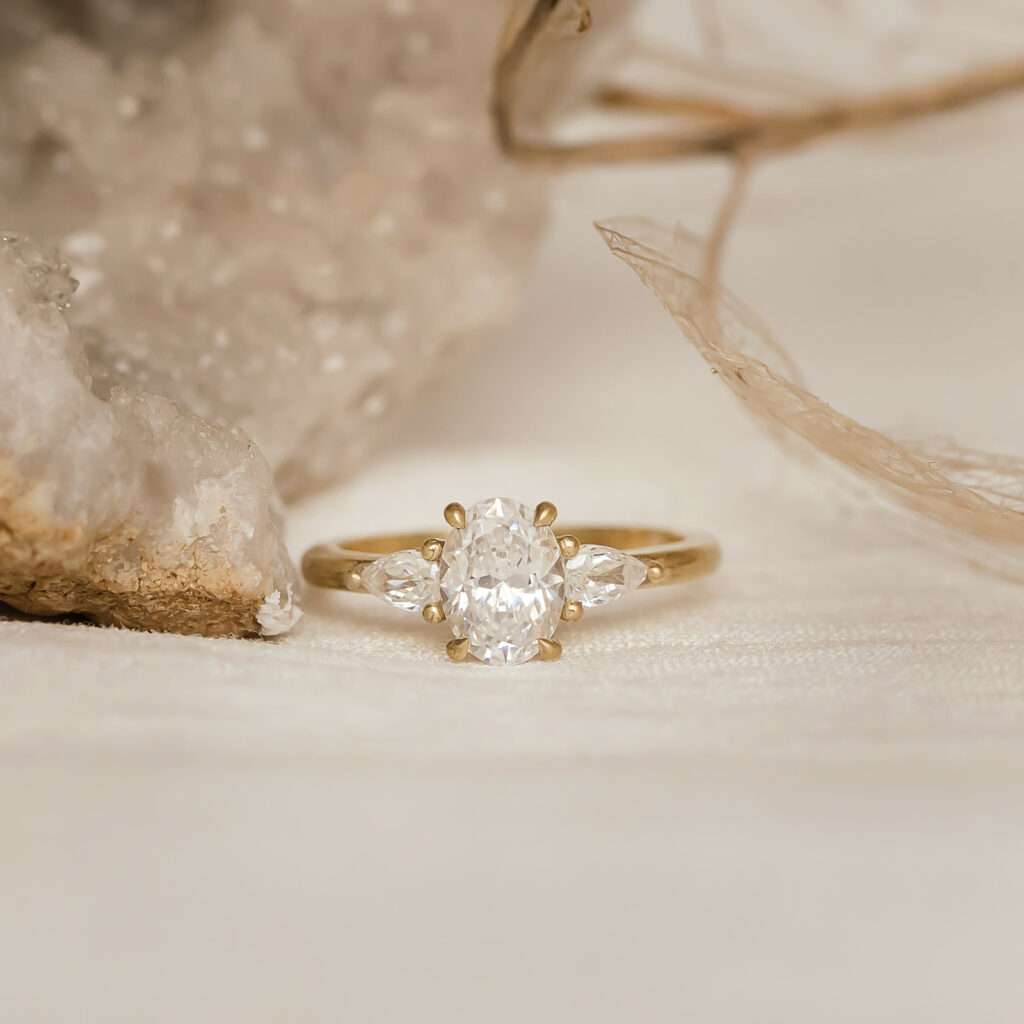
A three-stone engagement ring has a centre diamond accompanied by two side stones. The side stones may also be diamonds or other gemstones, depending on the design.
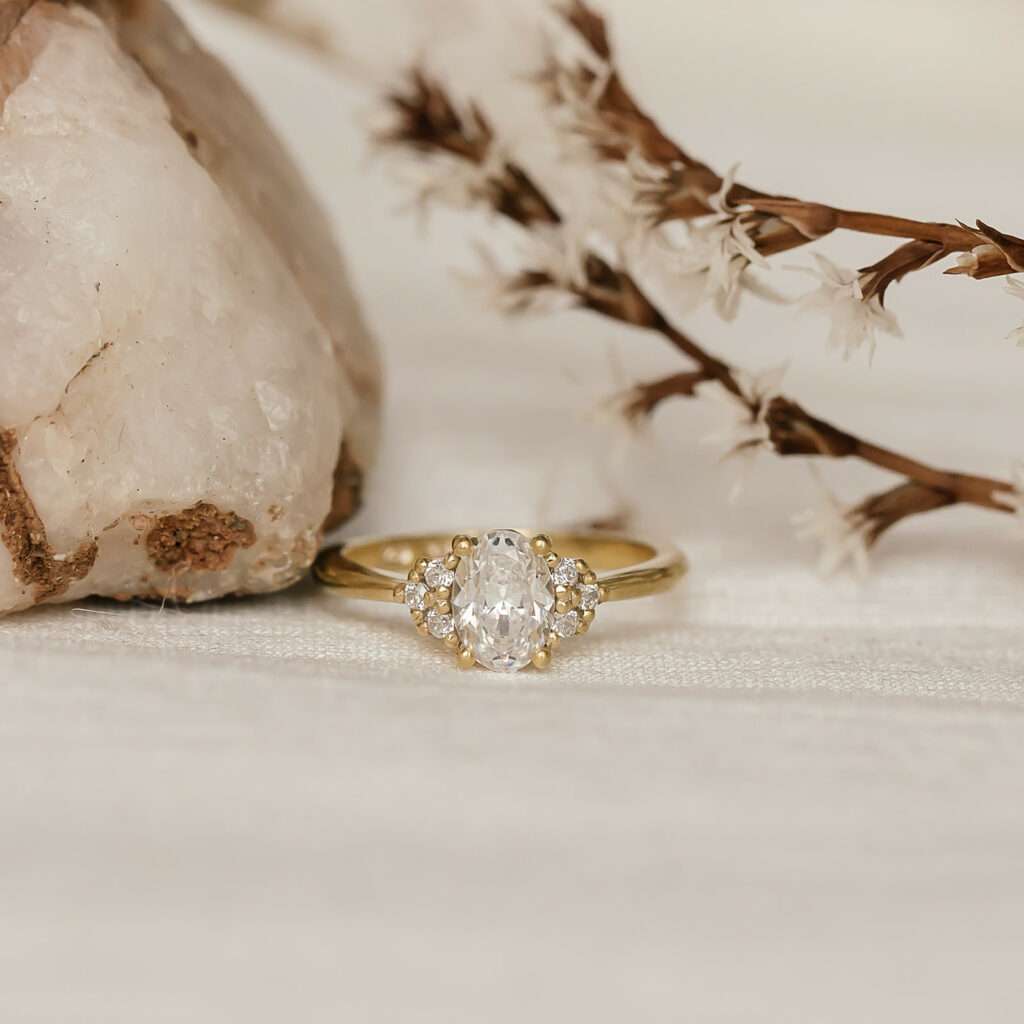
The stones can share the same shape or use different cuts. For example, a round centre diamond can be paired with tapered side stones, or an oval centre stone can sit between two smaller diamonds.
A plain wedding band can work with a three-stone ring, while a diamond-set band offers another option. The best fit depends on the setting and the spacing between the stones.
Diamond-Set Engagement Rings
Some engagement rings feature diamonds along part or all of the band. Pavé settings use small stones set close together, while other designs may use individually spaced diamonds or stones set into a channel.
When matching a wedding band to a diamond-set engagement ring, you can repeat the diamond setting, choose a plain metal band or introduce a different arrangement of stones.
If you are considering a custom design, these details can be planned around the centre diamond and the overall appearance you want to achieve.
Frequently Asked Questions About Diamond Engagement Rings
There is no single carat weight that is best for everyone. The right choice depends on your budget, preferred appearance and ring design. Compare the diamond’s dimensions, cut, colour and clarity rather than relying on carat weight alone.
The GIA colour scale ranges from D, which is colourless, to Z, which has light colour. D to F are classed as colourless, while G to J are near-colourless. The most suitable grade depends on the appearance you prefer, the metal you choose and your budget.
No. Some engagement rings are designed to sit beside a straight wedding band, while others work better with a curved or arched band. You can also choose a plain band to contrast with a diamond-set engagement ring.
Yes. Diamonds can be paired with gemstones such as sapphires, rubies and emeralds. Before choosing a coloured gemstone for daily wear, consider its hardness, toughness, treatments and setting requirements.
Neither metal is automatically better. White gold has a white appearance and may require rhodium replating, while yellow gold has a yellow tone and is available in different purities. The choice depends on your preferred colour, the ring design and the metal’s maintenance requirements.
Yes. A custom design can take both rings into account, including the shape of the centre stone, the setting, the band width and the position of any additional diamonds. Planning the engagement ring and wedding band together can help achieve the fit you want.
Your engagement ring does not have to begin with a design that already exists. It can start with a diamond you love, a particular metal, a reference image or a few ideas about the ring you would like to wear.
Stephani Cillié of Gold&I works with clients to develop custom jewellery designs around their preferences. From choosing a diamond and exploring different settings to deciding on the metal and finer details, the process allows you to shape the ring around your own ideas.